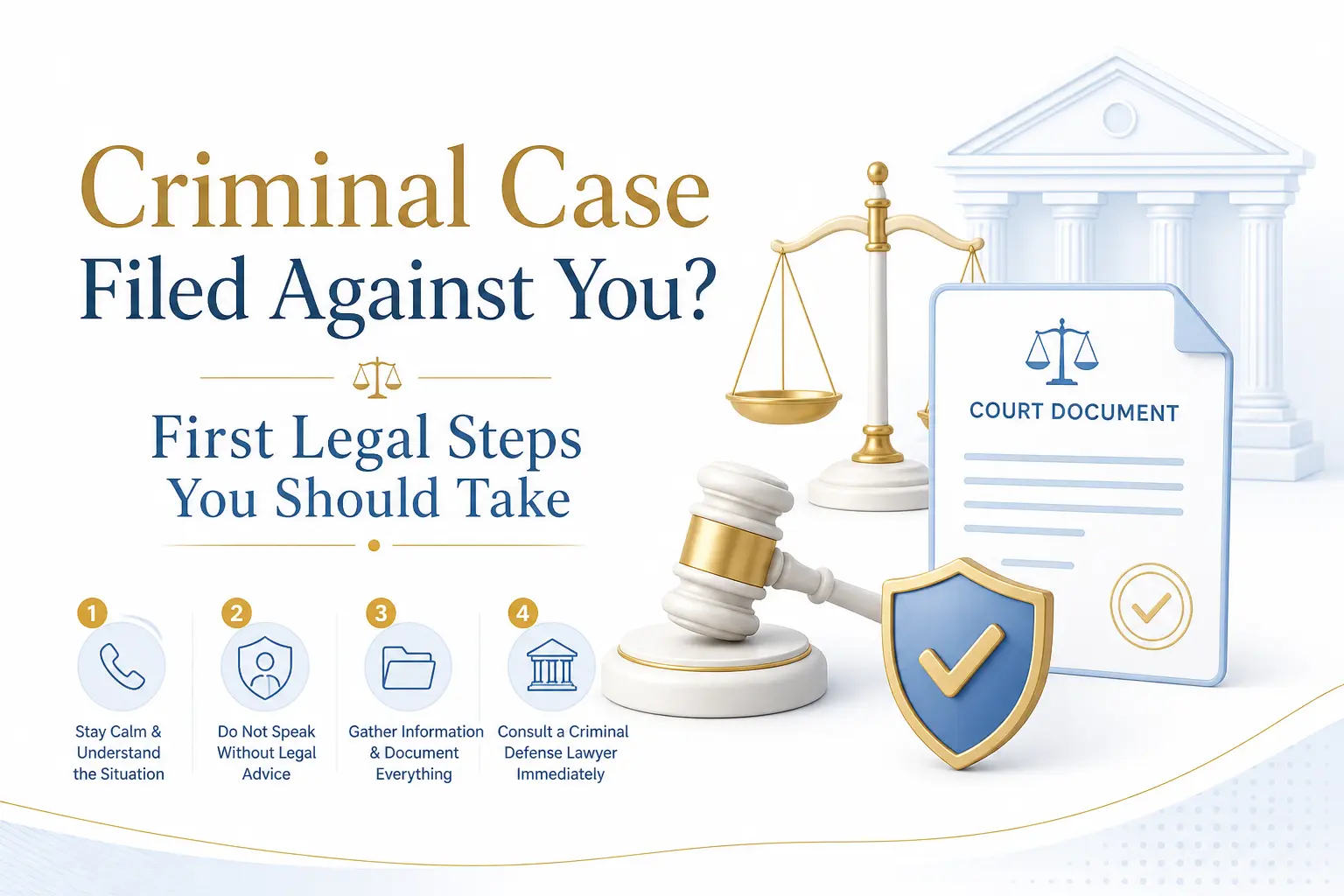
A Criminal Case Filed Against You can keep you awake at night even before you know what happened. One phone call by police, one FIR number, one notice from police or court or lawyer’s office, one document saying you are summoned, or complained against can make anyone go… WHAT? How? Life feels over. That panic is understandable. Most panic because they don’t know the legal difference between a police complaint, FIR number, notice to join investigation, bail stage, court summons, arrest memo, criminal trial, cheque bounce case, false allegations, defamation, and court processes. Relatives panic. Offices get worried. Families lose sleep. Banks observe caution. Students can’t travel. Employees get marked. Businesses lose clients. Neighbours start treating you differently. Let’s start simple. A criminal case filed against you does not mean you are guilty. But it does mean you have to respond carefully starting from the first stage itself. In my experience assisting clients, I have noticed many people make the same mistakes. They ignore the first notice from police. They visit police station casually without legal preparation. They fire emotional WhatsApp messages to the complainant. They try to settle under pressure without checking what exactly they are being accused of. They create more legal problems for themselves at a later stage because of early panic. If your friend has received a police notice, your relative got married, or someone you know has been accused in a criminal matter, they should read this article. I explain the first legal steps after a criminal case is filed against you, the first steps after FIR registration, basics about bail and anticipatory bail, important documents you must preserve, and when to speak to a Criminal Case Lawyer or Criminal Defence Lawyer. I have tried to cover all common issues so that anyone from Delhi NCR or India can use this article to stay calm and take practical steps before reacting inappropriately. Filing criminal complaints, investigating police officers, beating people at police stations, securing bail from courts, defending in trials, arguing technical laws… these were once stuff of movies. Today’s litigants in India experience a lot of these. In 2026, criminal litigation involves new criminal laws. The Bharatiya Nyaya Sanhita, 2023 deals with offences. The Bharatiya Nagarik Suraksha Sanhita, 2023 governs criminal procedure. The Bharatiya Sakshya Adhiniyam, 2023 deals with Indian evidence. All three laws were enacted by the Indian Parliament on 25th June 2024 and came into effect from 1 July 2024 subject to notified exceptions. If you live in Delhi, New Delhi, Noida, Ghaziabad, Gurugram, Faridabad, Meerut, Hapur, Lucknow, Jaipur, Mumbai or Bengaluru and get notices delivered to your society or office desk, the stakes are high. Employment can be affected. Business meetings can be stalled. Housing society may start rumours. Family relationships can suffer. You may not travel. Loan applications may be rejected. Police verification can become difficult. Your ability to conduct business can suffer socially. We handle a diverse clientele in Delhi NCR. From cheque bounce complaints, business loan payment disputes, matrimonial issues leading to criminal allegations, to rented property complaints, loan recovery complaints, online banking transaction disputes, employer and employee conflicts, cyber India complaints, motor accident and injury matters, allegations of assault, cheating complaints, and plain old blackmail under threat of criminal prosecution arising from commercial disputes. Someone who receives a police notice or court summons needs to learn the right way to respond. Panicking, arguing on phone, writing angry emails to the complainant, threatening teachers, landlords, employers, or showing the paper to everyone you know is not going to help. Understanding the basic legal rights after police investigation notice, how to handle bail, documents to gather, what enquiries to make, when to speak to lawyer, and when to comply with process are simple tasks. Following those basic steps will at least help you know whether you need to panic or not. These basic steps may also reduce avoidable arrests and panic-based statements or documents written without legal guidance. Take note: When it comes to cheque bounce-related criminal complaints, the very first thing many accused persons need is guidance about how to handle criminal complaint and summons in cheque bounce cases because most accused persons receive summons from court without understanding the next hearing date, mandatory appearance requirement, or what defence documents are required. Picture this: Your relative got married two weeks ago. Today someone has just filled a criminal case against you. You received the court summons this evening in the mail. You have no idea who complained and why. All you know is that your relative mentioned a “small matter” with the fiancé/every month ago and it has now blown up to a criminal case against you. You have no clue how to react. Here is why you should not react. A criminal case filed against you means someone has started a legal process against you. Police may have filled an FIR. Courts may have issued summons. A complainant may have sent you a legal notice. Someone may have complained to police and investigation will join soon. But that does not mean you are guilty of the offence. The police, court, or complainant has to prove the offence according to law. Many people say “mere against case ho gaya.” Technically, that single phrase can cover many situations. Did the police send you a notice asking you to join investigation? Did the police register an FIR against you and family members? Did the court send you a summons to appear? Is a bailable warrant or non-bailable warrant issued against you for non-appearance? Did someone file a complaint against you under Section 138 of NI Act or any other specific law? These are different situations. Your response to a police notice varies from response to court summons. Your strategy after receiving summons in a cheque bounce complaint varies from parental response to child’s cheating allegations. A false criminal case lawyer will first know whether to review complaint, documents, police enquiry stage, and risk of arrest before advising what to do next. Regardless of the flavours involved, here’s a simple definition: A criminal case filed against you means an allegation (more than one) of an offence (more than one) has been made against you in a lawful manner through police, court or other lawful processes. You have to carefully respond to the allegation through lawful means, which may include evidence, bail protection (where applicable), and court representation. If the matter involves police, your first step is not to argue on phone with the complainant. Your first step should be to assess the exact stage of police enquiry and case. Laws depend on facts. But most criminal cases in India involve the following central laws in 2026: India Code describes this law as an Act to consolidate and amend the laws relating to offences. This law deals with offences. It replaces the Indian Penal Code, 1860. India Code mentions this as Act 46 of 2023 which will come into force on 01 July 2024. This is the criminal procedure code. It deals with investigation, arrest, bail, inquiry, trial, summons, warrants, verification of documents, identity, and powers of criminal courts. India Code describes this as Act to consolidate and amend the laws relating to Indian evidence. This law deals with Indian evidence. Replaces the Indian Evidence Act, 1872. If someone tells you that FIR Filed Against You, ask for details. Is it a cognizable offence? What sections are mentioned in the FIR? Who is the police station and what’s the FIR number? What’s the complainant name and address? Can you see a copy of the FIR? Do they intend to arrest you? During investigation stage, counsels usually begin by finding out exact facts. Don’t rely on second or third party information. Families often hear about an FIR from a relative or neighbour who calls to “tell you about the police.” But half-information can lead to wrong decisions. Police sends notice usually when they want to question you or investigate your documents. Does the notice allow you to appear with counsel? What happens if you don’t respond? Can you file an application to come with counsel during investigation? Should you preserve documents and evidence now? These questions should be addressed quickly. It is common to need lawyer’s help where arrest is feared. Anticipatory bail law is different from regular bail law. Interim protection applications are different from regular bail after arrest. Read Bails in India for common citizen to understand basics of regular bail, pre-arrest bail, and anticipatory bail. Don’t wait until you are arrested (if that stage comes). Guide the police about your appearance and documentation in a bail-friendly manner. Apply for anticipatory bail where facts and law allow. Seek regular bail after arrest if you cannot avoid arrest. Remember: different stages require different bail applications. Criminal cases can begin with complaints to court. Courts issue summons after seeing the complaint and some material. Many cheque bounce complaints under Section 138 NI Act reach this stage first. If you receive summons, immediately focus on: Court appearance Bail, where needed Documents to preserve Assess if settlement is possible Start preparing defence. Persons accused in cheque bounce matters can also read – Avoiding Personal Appearance in Cheque Bounce Cases. If summons are ignored, courts can take stronger action. Bailable warrants, non-bailable warrants, cancellations of summonses, prosecution for non-appearance, and other consequences are possible. You do NOT want to operate your business hoping the court “may or maynot” issue a warrant. Pay attention. Cheque bounce is a common example where people need urgent help with Non-Bailable Warrant in cheque bounce cases because they have missed initial hearing or court deadlines. Someone who has received a police call, FIR info, complaint copy, summons, arrest warning, legal notice from opposing lawyer, or court papers needs to know the first legal steps in a criminal matter. Anyone can get into trouble. Employees, students, business owners, directors, startup entrepreneurs, tenants, landlords, salaried class, family members, retired individuals, loan borrowers, guarantors, employers, cheque writers, and accused in business or personal disputes all come to Cheque Bounce Lawyer for assistance. Accidental criminal cases are common. A business transaction goes wrong, convert into cheating complaint. Husband and wife fight, multiple allegations filed. Landlord-tenant disagreement leads to criminal complaint by both sides. Cheque bounce matter starts as money debt, becomes criminal matter under NI Act. Some people think that “criminal case has been filed against me” means arrest is certain or case will go to trial. Some people receive cheque bounce complaint and call for help regarding “criminal case.” The legal process for defending against cheque bounce allegations is different than general panic about criminal court cases. I have even helped family members where one spouse made false allegations. If someone tries to cheat you with false allegations, a false criminal case lawyer can study complaint, facts, documents, and come up with a planned legal response. Guide is for anyone who needs legal help after receiving process from court or police but does not know where to start. Calm is good. Total silence is dangerous. Panicking will only lead to mistakes. Document what you know. Preserve evidence. Understand the process. Take legal steps timely. Here are the first steps to take after a criminal case is filed against you: Before reacting, ask yourself: what exactly has been filed against you? Against whom? Is someone saying there is a police complaint against you? Has an FIR been registered against you? Have you been sent notice to join investigation? Has a court summons been issued against you? Is there a bailable warrant or non-bailable warrant against you? Has someone filled a private criminal complaint against you? Is it a cheque bounce complaint? Read complaint, FIR, notice, or summons carefully. Don’t argue. Ask for a copy of the complaint, FIR or police station details, and notice. Don’t argue. If it’s a cheque bounce complaint, see the Section 138 complaint, cheque copy, return memo, statutory notice, and delivery details. Don’t make a payment admission or informal statement before understanding how to file defence in cheque bounce case. Save evidence while it’s available. CCTV footage gets deleted over time. WhatsApp chat gets deleted. Emails get misplaced. Phone call records take time. Screenshots are fine for quick reference but don’t alter original documents. Scan evidence and save originals. Don’t edit, crop documents, or send selective documents to your lawyer. Courts take notice of altered evidence. Police can question authenticity too. One emotional message can destroy your criminal defence. You don’t want to say: “Ok dear I will pay everything.” Don’t say “sorry for the issue.” Don’t write “please please don’t file case against me.” Don’t tell police “I didn’t mean to cheat anyone.” You have every right to explain. But don’t make statements without legal preparation. Joining investigation is not mandatory in all cases. Police may have asked you to join investigation. You should still know what is alleged, under which sections, what documents you have to preserve, and what your rights are before making any statement to police. Speak to Police Case Lawyer or Criminal Case Advocate before you go. Let the lawyer frame your lawful response and decide whether you need bail protection. Not every criminal case results in arrest. But panicking and ignoring risk is equally unwise. Sometimes police calls can be harmless. You may not need to appear in person if you explain well. Sometimes police complaints are invalid for legal reasons. But if you know someone wants to file case or arrest is likely, you should do two things: Educate yourself about arrest risk Consider applying for anticipatory bail (Where arrest is feared) BEFORE police arrest you. Remember: regular bail applications are different. Timing and advance preparation matter. If court summons has been issued, ignore it at your own risk. Some people receive summons and ask, “CA against case kyu nikalte hain ( why should I attend a criminal case? ).” Sorry friend, the court will not wait for you indefinitely. Bailable warrant or non-bailable warrant will happen. Instead of waiting for police to come and make arrest at home/office, handle NBW in cheque bounce cases proactively. Some criminal cases can be settled or compounded. Cheque bounce is one such example. Matrimonial disputes allow for settlement through court mediation. Business payment disputes can be settled if the complainant agrees to settlement after criminal allegations are dropped or suitably dealt with. When exploring settlement, make it legally documented. Verbal agreements create future problems. Defence starts when you receive complaint or court summons. Reviewing legal ingredients, checking documents, collecting evidence, speaking to material witnesses, and understanding limited legal options start on day-1. Don’t wait until police send you notice, or court sends you warrant. Start preparing now. Don’t talk about legal matter with everyone. Don’t show everyone the FIR or court summons. Don’t post statement on social media. Don’t threaten the complainant. Don’t try intimidating the witnesses. Act quietly. And lawfully. Write this down. Collect and preserve the following documents: If the criminal matter involves cheque bounce by a debtor: Digital evidence can be submitted in original form. Take screenshots for quick reference. But original emails, bank records, electronic documents must not be tampered with. Police can question you about authenticity. Don’t artificially create evidence or doctor existing documents. Courts take time. Police investigation varies from offence to offence. Cheque bounce complaints have their own timeline. First Information Report investigation stage looks different. Your first window to respond begins when you get to know about the case. Do you need arrest protection? Is a court date due? Do you have documents to preserve? Do you need to reply or make a representation to police? Second window is after receiving summons or notice. Ignore court dates at your own peril. If you have a genuine reason to miss court, try to apply for exemption legally before the due date. Third window is settlement opportunity. Some cheque bounce matters can be settled at different stages. Cheque bounce cases offer scope of mediation or compounding where appropriate. Avoid verbal settlement. Fourth window opens after conviction in limited cases. Example: suspension of sentence is usually sought after conviction. Persons can seek help with cheque bounce conviction and get guidance about suspension of sentence in cheque bounce conviction cases Delay is not the end of world in every criminal matter. But needless delay never helped anyone. “I ignore calls from uncle police station waala, kaise haarta hoon?” Many accused persons think this way. But it’s a BIG mistake. Here’s a list of common mistakes after FIR or police complaint: If you have received notice in cheque bounce matter, one more mistake is common. Treating cheque bounce matter as “only a payment issue between us.” Ignore court or police notices related to cheque bounce matter and trouble comes calling. When court issues NBW in cheque bounce cases, panic sets in. Ignoring a criminal case can lose you an opportunity to control the narrative. Once family reacts, panic spreads. Once police notice is ignored, family calls twice. You may lose the option of bail. You may face arrest. Court may pass adverse orders. Your reputation is at stake even if you are innocent. Ignoring cheque bounce notice can lead to Non-Bailable Warrant in cheque bounce case. Don’t wait for police to come and raid your house. Ignoring a criminal matter can escalate the issue to a point where you have less control over how to defend your position and rights. Contact lawyer when you receive police notice, or when your family receives legal notice from court about criminal matter. You need lawyer’s help as soon as you know there is a criminal allegation against you or your family member. Contact lawyer before you give statement, visit police station, or ignore court summons. You need lawyer’s help if you received any communication from court or police about FIR, notice, complaint, arrest, warrant, legal notice, or lawsuit demanding payment linked to criminal charges. Accused in cheque bounce cases should speak to lawyer before making any payment admission or reply to cheque bounce complaint after receiving summons. Cheque bounce lawyers help clients at multiple stages: checking draft notice received, response to cheque bounce notice, proper defence against cheque bounce complaint, handling bail issues, recalling NBW in cheque bounce cases, exploring possible defence or settlement, and protecting client’s legal rights. Always remember: Ignoring legal communication can never be good defence. If police can and will come to arrest you, speaking to lawyer is the first step to prevent arrest. Talk to Cheque Bounce Lawyer TODAY if unsure about what to do next. Get your documents reviewed. Find out what next court date is and what to do. Remember step-1,2,3 … till 10 above. Did someone fill a criminal case against you? Want to speak to lawyer about criminal case but not sure if you should? Everyone has questions. Here are some commonly asked questions about criminal cases. Collect facts. Understand what stage are you at: police complaint, FIR, notice to join investigation, court summons, or warrant. Then gather papers mentioned above. Avoid speaking to police or making admissions. Start gathering your own evidence. Don’t panic. Contact lawyer to know what you can do about FIR against you. No. But you should handle FIR wisely. Not every FIR is random. Police investigate after receiving information. As long as investigation is on, you can assist counsel and police to clear your name. That does not mean you should make arrest exposing statements. A counsel will guide you on what to do when police send notice. Police may send you notice to join investigation. But don’t go without preparing documents. Assess what you have to share with police and preserve evidence. You don’t have to join investigation casually. Where arrest is feared in non-bailable offence, you can apply for anticipatory bail. Ask lawyer about options. Application for anticipatory bail has to be filled in prescribed format with facts and laws. No one can guarantee anticipatory bail will be granted. After arrest or custody, person can apply for regular bail. Bail laws have different considerations before granting bail. Read Bail in India for Common Citizen to learn basics about bail and how it works. Police cannot cancel FIR but High Court has powers to quash FIR in appropriate cases. Court examines whether allegations made by complainant disclose offence. Court checks if proceedings are private mischief or there is legitimate reason to continue criminal proceedings. Ignoring court summons will increase problems. You can face bailable warrant, non-bailable warrant, or court can take further action. You should either appear in court or apply for exemption with solid reason to avoid appearing in court. Yes. Cheque bounce is a criminal matter where police do not get involved. Cheque bounce complaint can be filed in court against you. If statutory requirements are met, complainant can send you notice and court summons. Compoundable offences can be settled. Cheque bounce is one such example. Not all criminal offences can be settled privately. Some serious offences do not allow private settlement. Read Filing a False Criminal Case Against Someone in India for complete understanding of how false criminal cases work in India. Contact me when police send notice, or you got a copy of FIR filled against you and family members. Contact me when your family received notice from court or police station. Contact me if you got summons, warrant or complaint from court. Contact me if someone is threatening to file cheque bounce case against you. Better to speak early, than say too late.Criminal Case Filed Against You? 10 First Legal Steps To Take in India
Why This Issue Matters in Delhi NCR and India in 2026
Quick Facts: Criminal Case Filed Against You
What Does a Criminal Case Filed Against You Actually Mean?
What Legal Framework Applies After an FIR or Criminal Complaint?
The Bharatiya Nyaya Sanhita, 2023
The Bharatiya Nagarik Suraksha Sanhita, 2023
The Bharatiya Sakshya Adhiniyam, 2023
FIR stage
Police notice and investigation stage
Bail and arrest protection
Court summons and complaint cases
When to avoid court in person
Warrants
Who Needs This Guidance?
What Are the First Legal Steps After a Criminal Case Is Filed?
Step 1: Find out the exact stage
Step 2: Collect the papers before reacting
Step 3: Preserve your own evidence
Step 4: Avoid emotional admissions
Step 5: Speak to lawyer before visiting police station
Step 6: Assess arrest risk
Step 7: Attend court dates properly
Step 8: Explore settlement only where legally proper
Step 9: Prepare defence early
Step 10: Keep family and workplace communication under control
Documents and Evidence Checklist
Timelines, Delays and Decision Windows in Criminal Cases
Mistakes Made After Receiving FIR or Police Complaint
Risks of Ignoring a Criminal Case Against You
When to Contact a Criminal Case Lawyer?
How Cheque Bounce Lawyer Can Help
FAQs
1. What should I do first if criminal case has been filled against me?
2. Does FIR registration mean I am guilty of the offence?
3. Should I go to police station if my name is mentioned in FIR?
4. What is anticipatory bail and how can I apply?
5. What is Regular Bail?
6. Can a false FIR be cancelled by police?
7. What should I do if I ignore court summons?
8. Can cheque bounce be filed as a criminal case against me?
9. Can criminal cases be settled?
10. When should I contact Advocate BK Singh?
There's no reason for concern. There is no difficult-to-understand legalese.
Someone who has helped many people with the same problems gives you clear, honest advice. We want to make the legal process easy to understand and use for everyone.