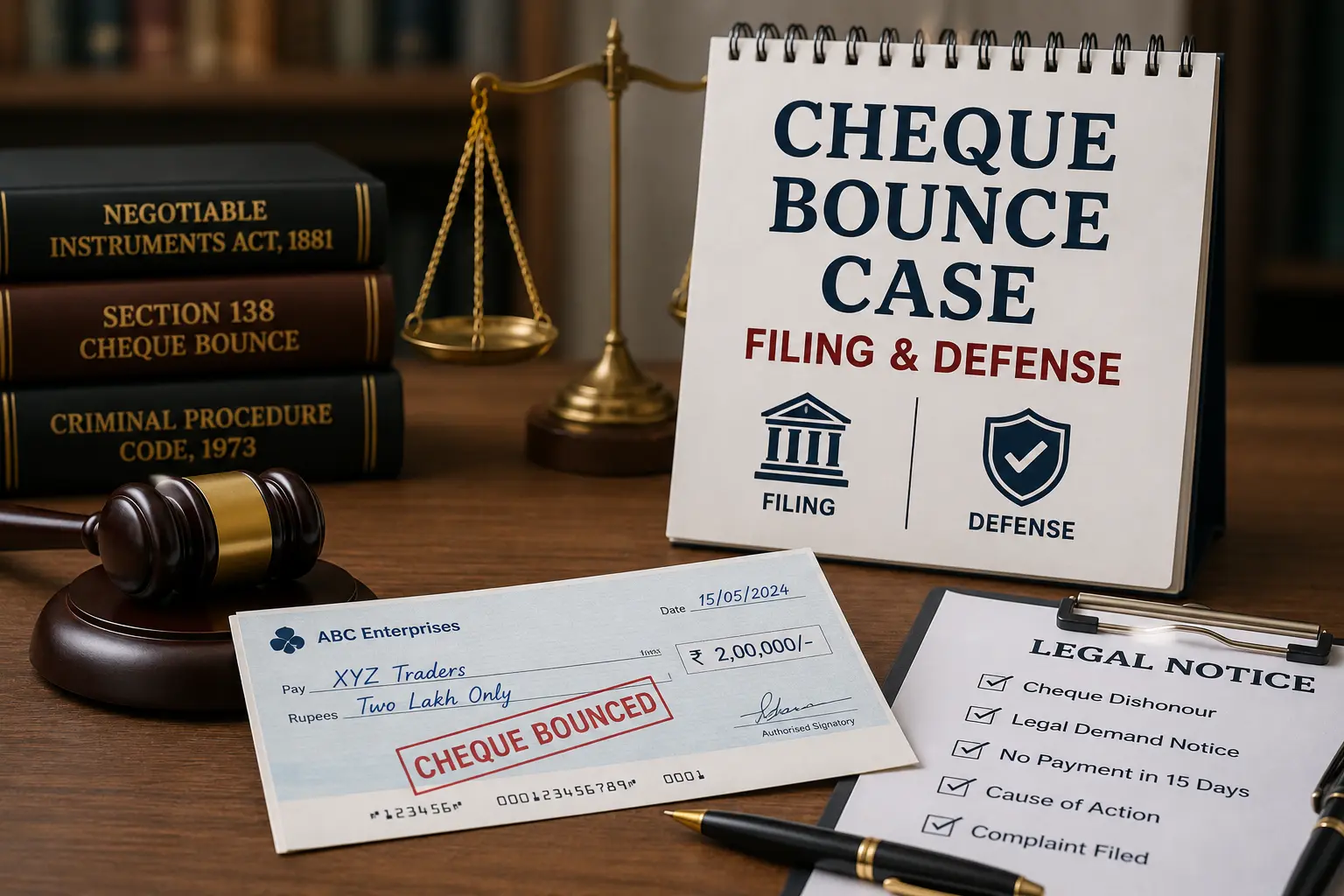
Cheque bounce filing and defence sometimes look like straight court battles. One party says money is owed. Other party says cheque was misused, issued as security cheque, already paid or not backed by legally enforceable debt. Temperatures rise before the legal notice is even sent. Yet many cheque bounce mediation, negotiation, settlement and Lok Adalat topics can be addressed outside court with help from a lawyer. The lawsuit is not ended by simply talking to each other. All terms must be agreed properly, payments evidenced correctly and court orders obtained for compounding, withdrawal, acquittal, disposal or closure at the relevant stage. See why this distinction matters: Cheque bounce is a criminal law matter due to punishment in Section 138 of the Negotiable Instruments Act, 1881. But most cheque bounce disputes are about money. Courts encourage settlement of most cheque bounce matters since the subject is typically payment, liability, delay and proof. In fact, the NI Act expressly allows compounding of offences under Section 147 because the offences are compoundable. Advocate BK Singh simplifies this explanation for clients. Money dispute can often be solved through mediation. Legal closure requires proper documents in and from court. A verbal agreement, WhatsApp message or informal instalment promise can lead to greater risk. Cheque bounce mediation may benefit complainants, accused persons and businesses. Below we explain how mediation works in cheque bounce cases, when it helps, when it fails, and how proper documents can reduce future risk. Cheque bounce disputes are common in trade, business and money exchanges. From Delhi NCR and Mumbai to Bengaluru, Hyderabad, Pune, Ahmedabad, Jaipur, Lucknow, Kolkata, Chennai – urban centres report disputes between: Large or small – the cheque bounce pressure affects both sides. Complainant fears loss of recovery. Accused faces inconvenience of summons, court visits, damaged reputation, potential conviction, compensation liability, payment of fine, and disruptive business scrutiny. Family matters when the cheque amount involves lakhs. Don’t miss this reason why mediation matters: Both sides get a chance to discuss repayment without courtroom posturing. Mediation in a cheque bounce matter allows repayment terms, liability acceptance, instalments, waiver of contested charges, return of original documents, withdrawal of connected complaints or agreed closure of litigation to be discussed on a mutually agreed seat. But mediation cannot be abused to evade the law. Cheque was not issued in vain. If the drawer knew the cheque would bounce because there was no debt, he cannot claim protection from trial by entering mediation. If the cheque was intentionally misused by the holder, the accused cannot ignore the statutory notice and decide later the two parties will “talk and sort things out”. Cheque bounce mediation cannot override the law. Each cheque bounce mediation is fact specific for Advocate BK Singh. Sometimes settlement is the right option. Sometimes defence must continue. Sometimes the complainant should send the legal notice without delay because limitation will expire soon. Lawyers look at the facts first. Visitors who prefer to jump straight to settlement-help pages can read about Settlement Mediation in Cheque Bounce Matters. Simply put, cheque bounce mediation means the parties to a cheque bounce matter sit together to try and resolve the underlying dispute. The mediation can occur before cheque bounce filing, after sending the legal notice, after receiving summons, during trial proceedings, at the appellate stage, or at a later stage depending on facts. The core legal issue is this: Is it possible to settle the actual financial dispute that caused the cheque to bounce without having to go through a full contested trial? Often, yes. That is why courts promote mediation in cheque bounce cases. But you cannot ignore the requirements of the NI Act. To proceed with a cheque bounce case, the complaint must show the cheque was issued for discharge of a legally enforceable debt or liability, the cheque bounced (dishonoured), the holder sent a statutory demand notice within 30 days from receiving information of cheque dishonour, cheque amount was not paid within 15 days of notice, and the complaint was filled before the competent magistrate within 30 days of cause of action. To defend a cheque bounce case, one can show no legally enforceable debt/liability existed, cheque was taken as security, notice was defective or served to wrong person, payment was already made, and raise limitation, jurisdiction, prior account had been handed over, company versus director issues etc. as defence based on facts. If both sides understand the core legal issue in mediation, it is easier to decide whether settling makes sense. Advocate BK Singh asks questions to decide if your matter can be settled quickly or if filing, replying, making a court appearance, or working on defence should take priority. Indian law on cheque bounce is contained in The Negotiable Instruments Act, 18 81. Section 138 punishes the drawer whose cheque gets dishonoured for insufficiency of funds if the cheque was issued to meet a legally enforceable debt or liability, and other procedural requirements are met. Compensation to complainant, imprisonment of drawer, or fine which may extend to twice the cheque amount, or both are punishment for a cheque bounce crime. Once notice is sent under Section 138 NI Act, the law presumes the cheque was issued for payment of a debt or liability. Section 139 places the burden of proof on the drawer to rebut this presumption. Section 142 talks about which court will take cognizance of the cheque bounce complaint, limitation (maximum time to file) and competence. Section 143 allows summary trial of cheque bounce complaints. Section 143A inserted a provision for interim compensation to be paid by drawer during trial. Section 148 covers deposit by drawer on conviction at appellate stage. Offences under the NI Act are compoundable as per Section 147. Compoundable means a criminal offence is settled and closed through compromise with the other party subject to receiving the court’s approval and considering the stage of proceedings. Mediation is the act of communicating for settlement. Compounding is when the legal closure takes place. Settling is different from fighting the case. If clients are unclear about this distinction, Advocate BK Singh tries to clear their doubts before helping with mediation or advising on court strategy. The court must ultimately record the compromise, accept a compounding application and issue a closure order. Settlement via mediation is incomplete without these. Learn how cheque bounce complaints are filed by reading this Section 138 Complaint Guide . One side always issues the bounced cheque. But that side becomes the complainant in a cheque bounce case if he or she decides to send the statutory notice and file complaint against cheque dishonour. Remember: An accidental cheque bounce can ruin otherwise good relationships. Lawyers can help customers preserve the relationship through mediation without weakening their rights. Like complainants, the accused can also be any person who issues or signs cheques. Accuseds include borrowers, business owners, companies, contractors, traders, suppliers, partners, guarantors, debtors, landlords, tenants,account holders and professional/service providers who want to prevent cheque bounce complaints in court. Mediation can be applied to resolve lawful disputes without damaging future business. Small business owners and startups tend to avoid asking for legal help. Cheques are often exchanged between businesses who continue working together after a dispute arises. If both parties goto court, someone will win and someone will lose. Future business may be over. Through mediation, parties can agree on instalments, reconcile for future transactions or at least close the matter through documented terms.Can Cheque Bounce Case Filing & Defense be resolved through mediation?
Why Does Cheque Bounce Mediation Matter (Across India) in 2026?
Need answers before you read further? Find quick facts below:
What’s The Core Legal Issue In Cheque Bounce Mediation?
Law Guide: Learn About Legal Process for Cheque Bounce Filing, Defence and Mediation
Who Needs To Read This? Cheque Bounce Customers Explained
There's no reason for concern. There is no difficult-to-understand legalese.
Someone who has helped many people with the same problems gives you clear, honest advice. We want to make the legal process easy to understand and use for everyone.