Offense under Section 138 of the Negotiable Instruments Act
A bounced cheque is more than just a money issue. It feels like a direct attack on trust for a lot of middle-class families and small businesses. The buyer wrote a cheque, so the supplier sends the goods on credit. A landlord takes a security cheque because they think the rent will be safe. A friend gives you money after you give them a cheque that is dated for a later date. Then the bank sends it back unpaid, and the person who wrote it starts avoiding calls, making excuses, or asking for more time without being clear. At that point, the stress is both real and emotional.
Section 138 of the Negotiable Instruments Act was made to protect the credibility of cheque and stop people from casually dishonoring them. It gives the payee a legal way to get their money back and also makes the drawer feel like they have to be responsible. Advocate BK Singh leads Cheque Bounce Lawyer, which helps clients deal with these issues in a structured way that focuses on timelines, proper notice, and strong documentation so that technical mistakes don't weaken the case.
1. Why Section 138 is Important for Middle Class Families and Small Businesses
For families with jobs, one bounced cheque can mess up their plans for the month, their home EMIs, their school costs, and their medical needs. A lot of people don't want to file a case because they think it will be hard, but waiting often helps the person who owes money. When a cheque bounces, it hurts MSMEs even more. It has an effect on working capital, vendor trust, and daily tasks. One unpaid cheque can set off a chain of bills that aren't paid.
Section 138 lays out a clear way to hold people accountable. It's not just about punishment. It is about putting pressure on people to pay and settle. Advocate BK Singh and the Cheque Bounce Lawyer team know that clients don't want to keep going to court without any clear direction. They want quick, clear, and useful results.
2. What is a crime under Section 138?
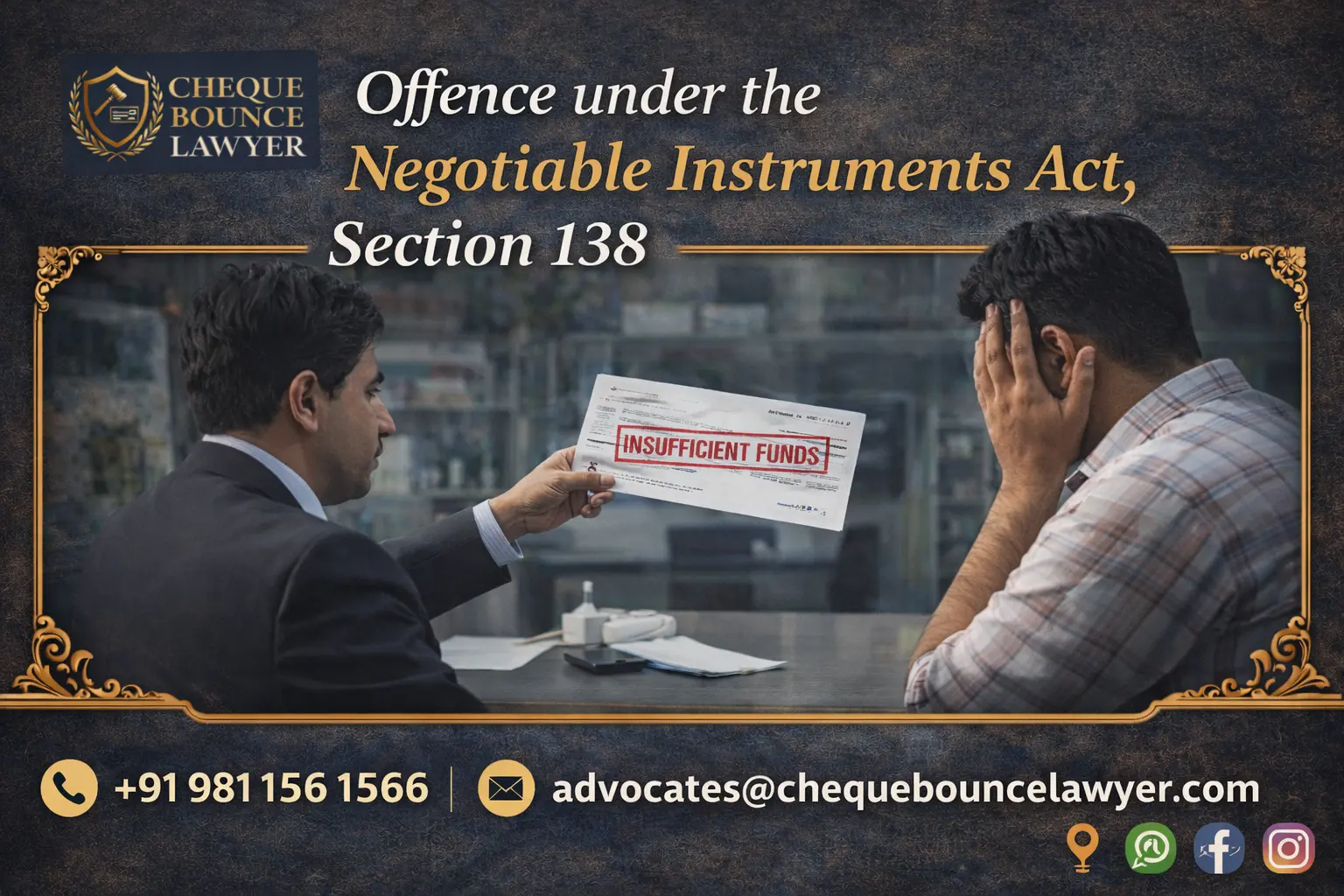
If a bank returns a cheque that was written to pay off a legally enforceable debt or liability, that is a Section 138 offense. Some common reasons are not having enough money, going over the limit, closing the account, or stopping payment in certain cases. The law takes this dishonor very seriously because a cheque is a promise backed by the bank's reputation.
But the crime isn't always there. The law says that certain things must be done, such as presenting the cheque within the time frame set by the law, sending a legal demand notice within the time frame set by the law after dishonor, and giving the drawer a chance to pay within the notice period. A Cheque Bounce Lawyer makes sure that these steps are followed correctly because most weak cases fail because they miss deadlines.
3. The Timeline That Determines How Strong the Case Is
When it comes to bounced cheque, timing is everything. You have to take the cheque to the bank before it runs out. After dishonor, a demand notice must be sent within the time allowed by law from the date the bank return memo was received. The notice must clearly ask for the cheque amount and be properly served.
If the payment isn't made by the deadline, the complaint must be filed within the time limit. A lot of people lose strong cases because they wait too long, keep accepting excuses, or send casual messages instead of a formal notice. Advocate BK Singh always says that once the cheque is dishonored, emotional trust should never take the place of legal discipline.
4. What Documents and Evidence Make a Section 138 Case Strong
A strong case file usually has the original cheque, the bank return memo, a copy of the legal demand notice, proof of dispatch and service, and papers that show the transaction or liability that caused the problem. Invoices, delivery receipts, purchase orders, ledger accounts, and acknowledgment messages make businesses stronger. Written acknowledgments, messages about repayment, and proof of bank transfer can all help show that you are responsible for personal loans.
Courts also look for consistency. The law says that the complainant is right if the story is clear and backed up. Cheque Bounce Lawyer helps clients put all of their evidence in a clear order so that the file looks complete and credible, not like a bunch of papers lying around.
5. Common defenses made by the drawer and how they are dealt with
A lot of people who are accused say that the cheque was given as security, that there was no debt, that the cheque was misused, or that the goods were bad. Some people say the signature isn't theirs or that they were forced to write the cheque. If you have the right evidence and a consistent transaction trail, you can challenge these defenses.
There are a lot of arguments about security cheque, but the outcome depends on the facts and the type of liability. Advocate BK Singh's main goal is to show that there was a legally enforceable liability when the cheque was given. The best way to do this is to clearly show the business or loan transaction and keep the paperwork organized so that defenses don't make things more confusing.
6. What Cheque Bounce Lawyer and Advocate BK Singh Do to Handle the Case
The first thing a Cheque Bounce Lawyer does is look over the case quickly, including the dates of the cheque, the memo date, the limit, and the quality of the evidence. After that, the legal notice is written in clear language, with the right demand and all the right information. After getting notice, the strategy changes based on how the person responds. Some things can be settled at the notice stage, while others need to be filed right away.
Advocate BK Singh is all about outcome-driven litigation. The goal is to get better and move on, not to keep the issue going. When a settlement is possible, it is set up with safe terms. If the accused is being evasive, the case is pushed with strong evidence and quick action. This is especially helpful for MSMEs because they can't wait forever to get their working capital back.
7. Practical Settlement Strategy for Section 138 Cases
It's usually possible to settle at different times, but it has to be done safely. A lot of people who complain accept partial payments without getting the right written terms, and then they have problems again. A proper settlement includes a payment plan, a clear written acknowledgment, the consequences of not following through, and safe steps for withdrawal only after full compliance.
The best settlement is one that keeps the complainant safe and gives the accused a clear, enforceable way out. Advocate BK Singh helps clients settle their cases in a safe and respectful way, making sure that the case's pressure is used correctly without putting the client's recovery rights at risk.
Reviews from Clients
*****
Ritika Nair
I was confused about what to do next when my tenant's rent cheque bounced. The notice put pressure on me, and the lawyer helped me through each step. Advocate BK Singh did a clear and professional job of it.
*****
Manish Verma
A business client gave me cheque, but they all bounced. Cheque Bounce Lawyer did a great job of organizing my bills and proofs. Advocate BK Singh's plan helped me get my money back without too much stress.
*****
Farhan Siddiqui
I got a memo back, but I didn't know when the notice would come. Cheque Bounce Lawyer acted quickly and wrote a strong notice. Advocate BK Singh made sure that the case was clean and well-organized.
*****
Priya Deshpande
The person who was accused kept saying that the cheque was just for security. Cheque Bounce Lawyer made it clear who was responsible. Advocate BK Singh's way of doing things made me feel better, and the problem was fixed.
*****
Karanjit Singh
I was losing sleep because my working capital was stuck. Cheque Bounce Lawyer took care of everything in an organized way. I felt a lot better when Advocate BK Singh focused on recovery and settlement.
?FAQs
Q1. What is the crime under Section 138 of the Negotiable Instruments Act?
Section 138 deals with dishonoring a cheque given for a legally enforceable debt or liability when the person who wrote the cheque doesn't pay even after getting a proper legal demand notice on time.
Q2. Is it a crime or a civil case if a cheque bounces?
Section 138 is a crime with a legal process, but it is often used as a strong way to get people to pay back money. Depending on the facts, civil recovery may also be an option.
Q3. What should you do first after a cheque is not honored?
Keep the bank return memo and send a proper legal demand notice as soon as possible, within the time limit. The case is often weaker when there is a delay or informal communication.
Q4. What if the drawer says the cheque was a security cheque?
The defense is based on facts. The case can still be strong if there was a legally enforceable liability when the cheque was given. It's very important to have clear proof of the transaction and a clear timeline.
Q5. Is it possible to file a Section 138 case without a written agreement?
Yes, many cases are successful because of evidence like cheque, memos, notices, and transactions like invoices, bank transfers, or messages of receipt. Written agreements are helpful, but not always necessary.
Q6. What happens if the person who is accused pays after getting the legal notice?
The crime doesn't go any further if the full payment is made within the notice period. At this point, when notice is properly written and served, a lot of things get settled.
Q7. How long does it usually take for a cheque to bounce?
The amount of work a court has to do and how the parties act can affect the timeline. A well-organized case file and structured settlement approach often speed things up and make it more likely that the case will close early.
Q8. What papers do you need to make a strong Section 138 complaint?
It's important to have a cheque, a return memo, a copy of a legal notice, proof of service, and documents that show liability, such as invoices, ledgers, delivery proof, or bank transfer records.
Q9. Can an authorized person file a case for a bounced cheque for a company?
Yes, businesses can file through an authorized representative as long as they have the right paperwork. Keeping clear records of authority stops people from complaining.
Q10. Why should you choose Cheque Bounce Lawyer for Section 138 cases?
Cheque Bounce Lawyer makes a perfect case file and a strong legal notice. Advocate BK Singh's main areas of focus are recovery-driven strategy, settlement safety, and disciplined litigation.
There's no reason for concern. There is no difficult-to-understand legalese.
Someone who has helped many people with the same problems gives you clear, honest advice. We want to make the legal process easy to understand and use for everyone.